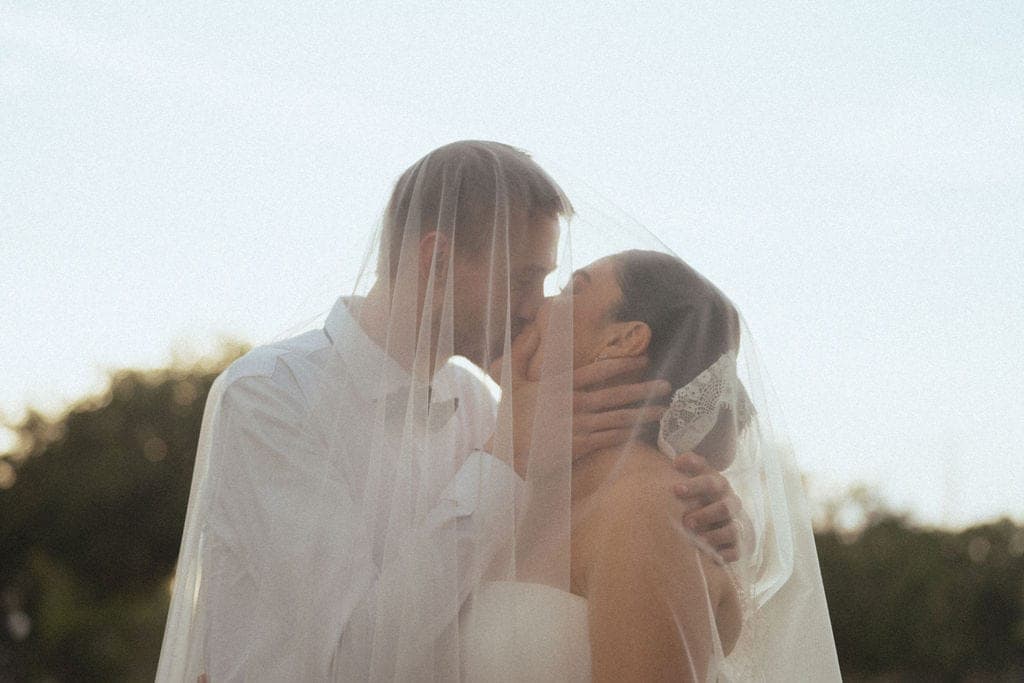
If I could protect exactly one thing on a wedding timeline, it would be this. Not the first look, not the detail shots. Twenty minutes near sunset.
Here is why, and how to actually make it happen.
What Happens to the Light
When the sun is high it comes straight down, which puts shadows under eyes and noses and blows out the sky.
Near sunset the light travels sideways through much more atmosphere. The blue wavelengths scatter out, leaving warm gold. It wraps around faces instead of falling on them, and the sky behind you turns colors it does not have at any other hour.
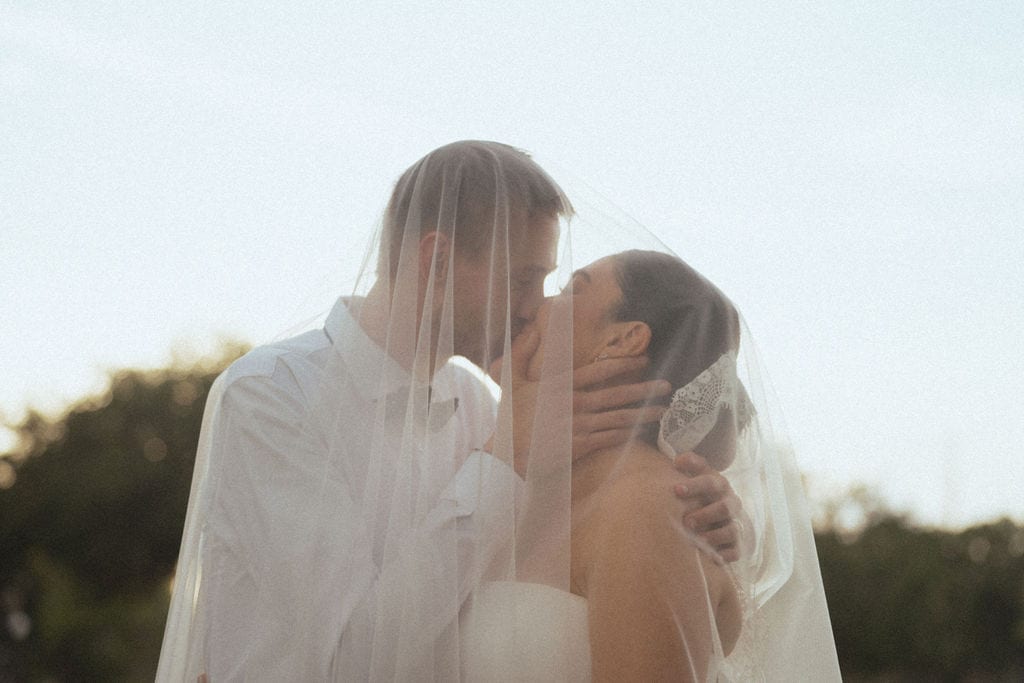
Florida gets a particularly good version of it because of the humidity, which softens and spreads the light, and because the Gulf coast faces open water to the west.
The Three Windows
The hour before sunset. Warm, directional, and easy to work in. This is the workhorse.
The last twenty minutes. The actual golden hour. Sun low and huge, everything gold, long shadows.
The twenty minutes after sunset. Blue hour, which most people skip. The sky goes deep blue, venue lights come on, and you get a look nothing else produces.
How Long It Takes
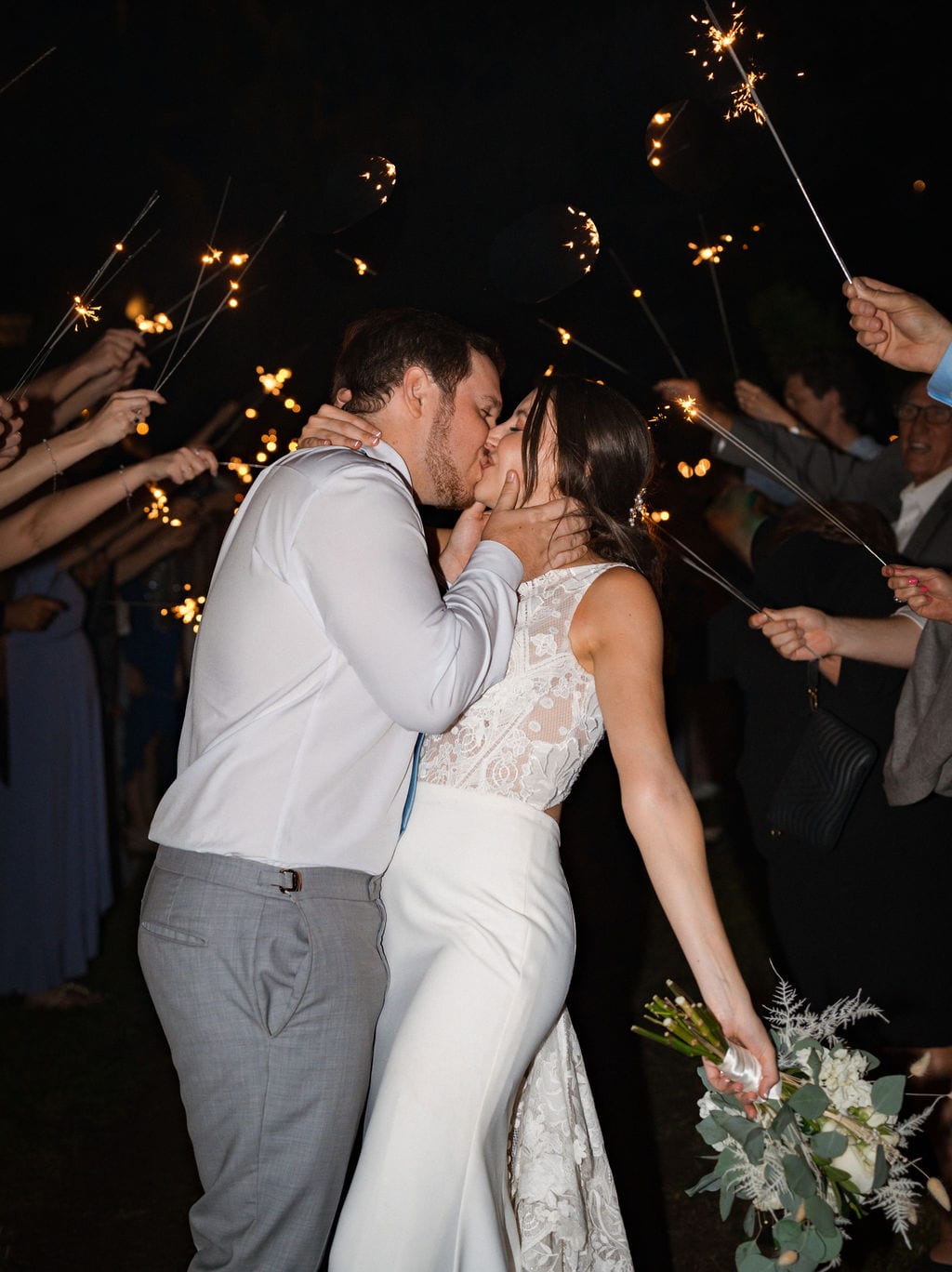
Fifteen to twenty minutes. That is all.
I say this because couples resist leaving their reception and assume it is a big production. It is not. You step out, we walk somewhere with a clean horizon, we shoot, and you are back before most guests notice.
Put It On the Timeline
This is the part that fails. Everyone agrees sunset photos are a good idea and nobody writes them down, and then it is 8:40 and the light is gone.
Treat it like any other timeline item:
- Look up the exact sunset time for your date
- Block 20 minutes ending at sunset
- Tell your planner, your DJ, and your catering manager
- Make sure it does not collide with toasts or dinner service
The natural slot is right after dinner and before dancing opens up.
Full sunset times by month here.
The Timing Trap
Sunset in Tampa moves almost three hours across the year, from about 5:35 in December to past 8:20 in June.
That means a December wedding with a 5:00 ceremony has no daylight at all afterward. If your ceremony is late in winter, you either move it earlier or you do a first look. There is no third option.
What Makes a Good Sunset Spot
A clean western horizon. Water, a field, a fairway, a parking lot with nothing in the way. Trees and buildings block the low sun.
Somewhere to walk to in under three minutes. If it takes ten minutes each way, the window closes.
Open sky. More sky, more color.
I scout this on every wedding walkthrough, and if the venue does not have a good option I will tell you before the day rather than during it.
Cloudy Days
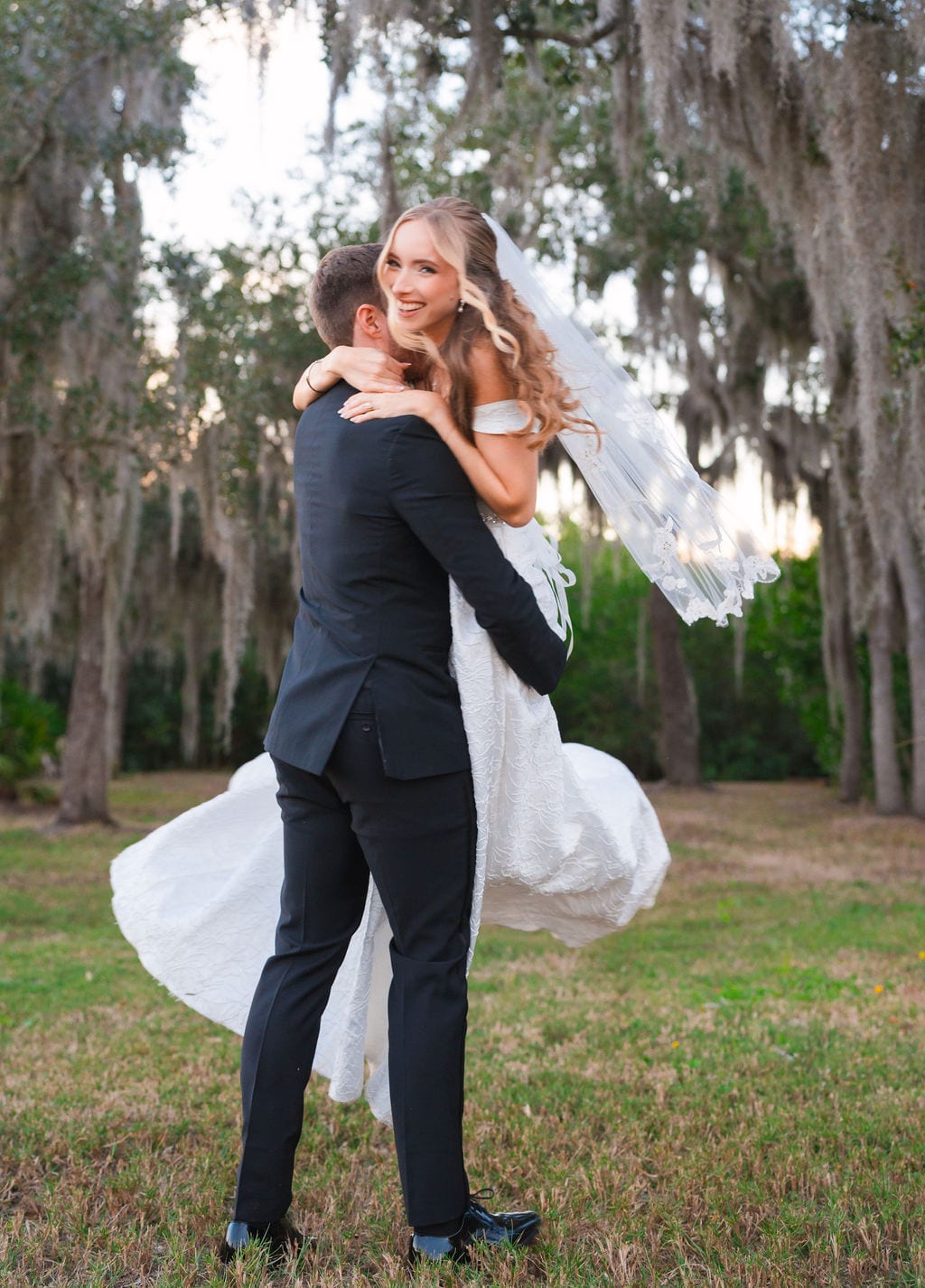
A completely clear sky is actually not the best sunset. It goes orange and then it goes dark.
Broken clouds are ideal. They catch color and hold it, and the sky lights up in a way clear skies never do. Some of my favorite skies have followed an afternoon storm.
So if your wedding day is partly cloudy, that is good news.
Beach Weddings
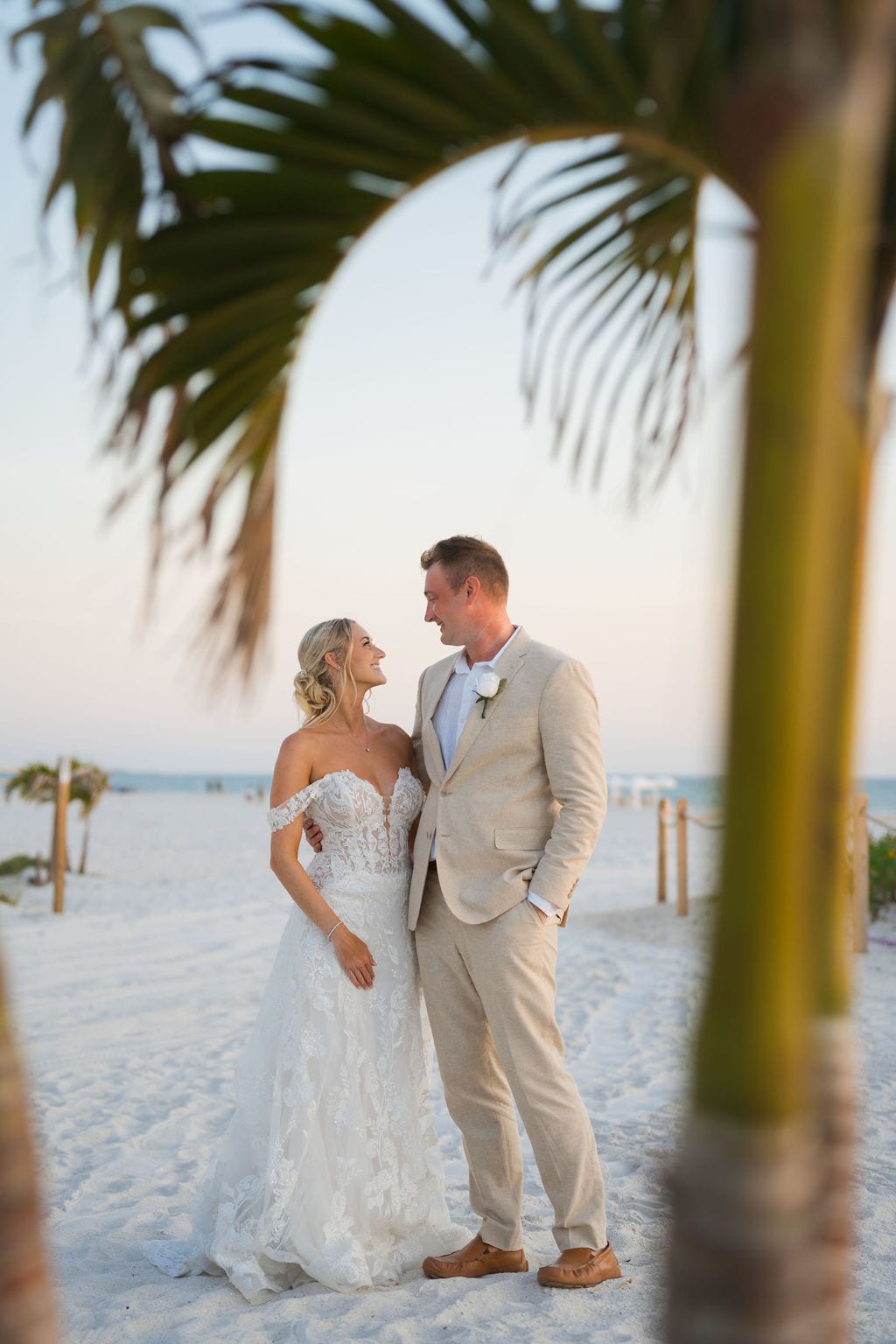
The Gulf coast is set up perfectly for this. West facing, unobstructed, water reflecting everything.
The one thing to plan around: if the ceremony faces the water in late afternoon, you and your guests are staring into the sun. Angle it, or start about ninety minutes before sunset.
What I Ask For
One thing: twenty minutes, whenever the light is best that day. I will tell you the exact time a week out, and I will come find you.
That is the highest return twenty minutes of your entire wedding, and the photos from it are the ones that tend to end up framed.
More on the portfolio, and you can reach out here.