Beach weddings look effortless, which is exactly why the permitting catches people off guard. Here is the practical version for the Tampa Bay area.
One caveat up front: rules and fees change, and every beach is governed by a different authority. Always confirm directly with the specific city or county before you commit. Treat this as a starting map, not the final word.
When You Need a Permit
Usually yes if you have:
- Chairs, an arch, or any setup
- A large group, often more than about 20 people
- A vendor setting anything up
- Amplified sound
Usually no if you have:
- Just the two of you and an officiant
- No chairs, no structures, nothing placed on the sand
- A small handful of witnesses
The line is generally about setup and group size, not about whether it is a wedding.
Photography alone almost never needs a permit on a public beach. Some state parks and preserves are the exception, so check those specifically.
Who to Contact
Clearwater Beach: City of Clearwater Parks and Recreation.
St. Pete Beach and Pass-a-Grille: City of St. Pete Beach.
Fort De Soto: Pinellas County Parks, and this one books far in advance.
Honeymoon Island and Caladesi: Florida State Parks. Separate process, separate fees, and worth starting early.
Siesta Key and Lido: Sarasota County Parks.
Anna Maria Island: varies by city, Anna Maria, Holmes Beach, and Bradenton Beach each handle it separately.
Rough Costs
Small ceremony permits often land in the $50 to $250 range. State parks and county preserves usually run higher and may require a reservation fee plus a per person charge.
Some beaches also require proof of insurance from your vendors, so ask your photographer, officiant, and anyone renting chairs for a certificate. I carry insurance and can provide a COI whenever a venue or municipality asks.
The Rules That Matter Most
Everything must come down. Chairs, arches, florals, all of it, usually same day and often within a set window after the ceremony.
Nothing gets left behind. This includes petals, which many beaches ban outright because they are not as biodegradable as people assume. Ask before you plan a petal aisle.
No stakes in sea oats or dunes. Dune vegetation is protected statewide and this is enforced. Arches need weighted bases.
Turtle nesting season, May through October. Real restrictions on lighting, and marked nests you cannot go near. If you are getting married in summer, ask specifically about this.
Public beaches stay public. You cannot close off a section. People will walk behind your ceremony. I frame around it and honestly nobody notices in the photos.
Timing and Tides
Check the tide chart for your date. Low tide gives you a wide flat beach with room for chairs. High tide can push everything up against the seawall.
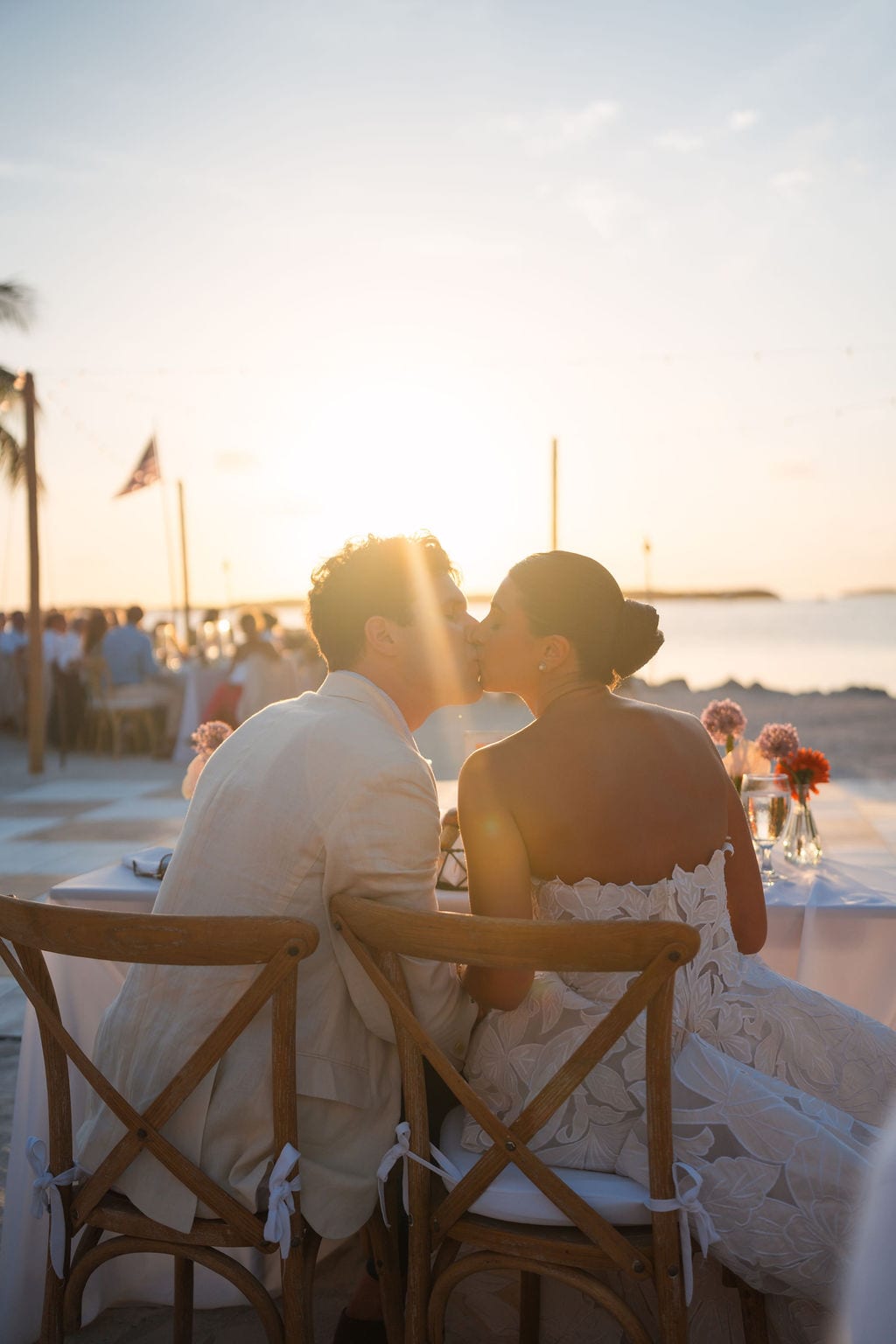
Aim for 90 minutes before sunset for the ceremony. That leaves the ceremony in good light and puts your portraits in golden hour.
The Things Nobody Warns You About
Wind is constant. Great for photos, hard on lightweight florals, veils, and anything paper. Weight your programs or skip them.
Sand and chairs. Standard folding chairs sink. Rental companies that work beaches regularly know this.
Sound does not carry. Wind and surf swallow a voice. For anything over about 30 guests, a small PA or a lapel mic makes a real difference, and that may require its own permit.
Parking. In season, beach lots fill hours before sunset. Tell guests to arrive early and consider a shuttle.
Simplest Path
If the permitting sounds like a lot, book a beachfront venue instead of a public beach. Resorts and beach clubs handle permits, chairs, sound, and a rain backup, and you trade some cost for a lot less coordination.
If you want the raw public beach version, it is very doable. Just start the paperwork early, because some of these book six to twelve months out.
Planning One?
I shoot beaches across Clearwater, St. Pete, Anna Maria, and Siesta constantly, and I am happy to talk through timing and logistics. More on the portfolio, and you can reach out here.